

When the Forest's Largest Residents Stay Hidden
Every forest has its silent guardians.
In Korba, they are often the animals you never see.
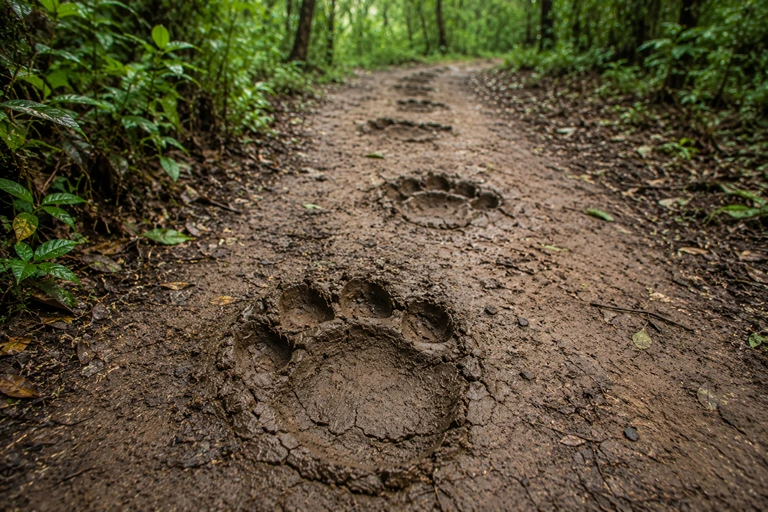
It is natural to hope for a memorable wildlife sighting during a jungle trek. Many visitors quietly wish for a glimpse of deer moving through the trees or perhaps an elephant crossing the trail in the distance. But experienced naturalists will tell you that the true beauty of wildlife lies not in chasing sightings but in understanding the signs that animals leave behind.
A fresh footprint pressed into damp soil.
A recently broken bamboo stem.
Mud rubbed against the bark of a tree.
The sudden alarm call of birds echoing through the canopy.
These small clues tell a story that most people walk past without noticing.
The forests around Korba form part of an important wildlife landscape where animals continue to follow traditional movement routes that have existed for generations. While trekkers remain on designated trails, the surrounding jungle continues its daily rhythm, largely untouched by human activity.
This is what makes the Korba Jungle Trek feel authentic.
You are walking through a forest where wildlife still behaves naturally.
The experience isn't built around guaranteed sightings.
It is built around respect.
Every Stream Carries More Than Water
After walking through dense Sal forests for several kilometres, the sound of flowing water becomes one of the most welcome companions on the trail.
Streams appear unexpectedly.
Some are narrow enough to cross in a single step.
Others gently wind through rocky valleys, creating quiet resting spots beneath the trees.
To trekkers, they offer cool drinking water (where safe and guided), beautiful scenery, and a chance to pause.
To the forest, they mean survival.
These streams support birds, insects, amphibians, reptiles, mammals, and hundreds of plant species. During the dry months they become gathering points for wildlife, while after the monsoon they carry nutrients across the forest floor, helping new vegetation flourish.
Sit quietly beside one of these streams for ten minutes and you'll notice something remarkable.
Life constantly arrives.
Butterflies settle on damp sand to absorb minerals.
Dragonflies skim just above the water.
Birds land briefly before disappearing back into the canopy.
Tiny fish dart between submerged stones.
The forest never really sleeps.
Water simply allows you to notice it.
Butterflies: Small Creatures That Reveal Big Secrets
Few visitors realise that butterflies are among the most useful indicators of a healthy forest.
Scientists often study butterfly populations because they respond quickly to changes in their environment. If native plants disappear, butterflies are usually among the first species affected.
That makes them valuable indicators of biodiversity.
Fortunately, the forests surrounding Korba continue to support a healthy variety of butterfly species, especially after the monsoon when flowering plants transform the landscape.
Walking slowly through open clearings, you may notice flashes of yellow, orange, blue, and white moving between shrubs.
For photographers, they create beautiful compositions.
For ecologists, they tell a much deeper story.
They suggest that the ecosystem is still functioning as nature intended.
The next time you photograph a butterfly during the Korba Jungle Trek, remember that you're looking at more than a beautiful insect.
You're looking at evidence of a thriving forest.
Did You Know?
Butterflies play a vital role in pollinating wild plants. Their presence helps forests regenerate naturally and supports the long-term health of native vegetation.
The Hidden Engineers of the Forest
The forest isn't maintained by large animals alone.
Much of its survival depends on creatures that most visitors never notice.
Look closely at a fallen tree after the rains.
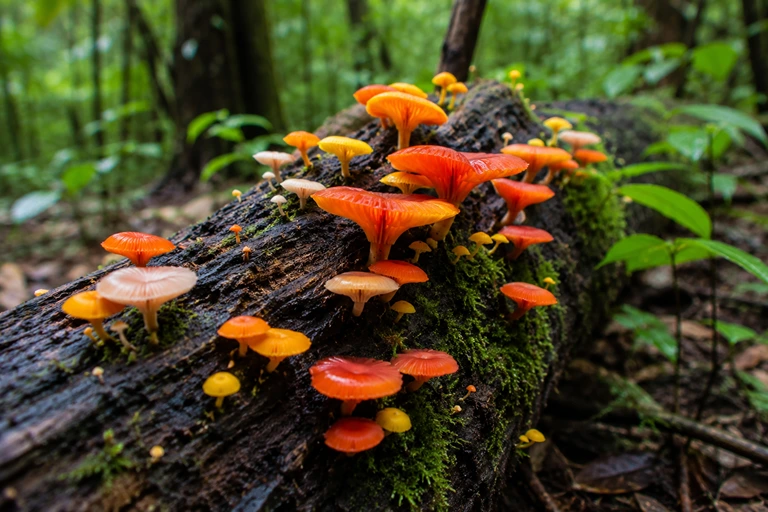
Tiny fungi begin breaking down the wood.
Termites quietly recycle dead plant material.
Earthworms improve soil quality beneath the surface.
Beetles carry organic matter back into the ground.
Without these small organisms, forests would slowly become buried beneath their own fallen leaves and branches.
Instead, nature continuously recycles itself.
Nothing is wasted.
Every fallen leaf eventually becomes part of another living organism.
Understanding this cycle changes the way you look at the forest.
Suddenly, even a decaying log becomes fascinating.
It isn't dying.
It is giving life to countless others.
Birds That Bring the Forest to Life
The forests of Korba are a paradise for bird enthusiasts, but even those with no knowledge of bird species quickly become captivated by the constant soundtrack above them.
Early mornings belong to the birds.
Long before trekkers begin packing their bags, the canopy is already alive.
Woodpeckers search patiently for insects hidden beneath bark.
Drongos perch confidently on exposed branches before darting after flying insects.
Parakeets announce their arrival with unmistakable calls as they move between fruiting trees.
Barbets remain hidden among thick foliage, their rhythmic calls echoing through the forest.
You don't need binoculars to appreciate them.
Simply standing still for a few minutes allows the forest to introduce itself.
In many ways, birds become the unofficial guides of Korba.
They reveal the changing rhythm of the day better than any clock ever could.
The Forest Floor Is Constantly Changing
One of the most overlooked aspects of biodiversity is the forest floor itself.
After every monsoon, Korba transforms.
Fresh grass begins covering previously bare soil.
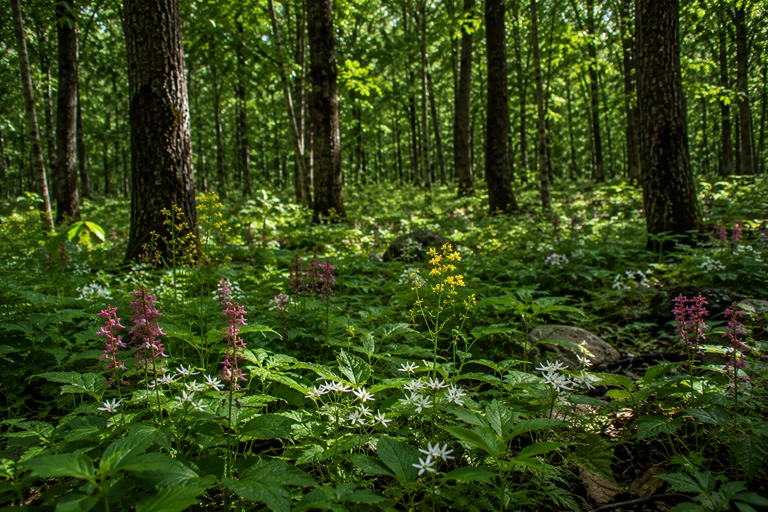
Seasonal flowers bloom for only a few weeks before disappearing again.
Mushrooms emerge almost overnight.
Young saplings compete for sunlight beneath mature trees.
This constant renewal keeps the ecosystem healthy.
It also ensures that every visit to Korba feels slightly different.
The trail you walk this year will never look exactly the same next year.
Nature is always rewriting the landscape.
That is part of its beauty.
If you'd like to understand why these forests feel so different from other trekking destinations, read our feature article:
The Jungle That Time Forgot: Why Korba Jungle Trek is Chhattisgarh's Best Hidden Adventure
Plants That Heal, Protect, and Sustain the Forest
When people think about biodiversity, they usually picture wildlife. Yet the true foundation of Korba's ecosystem is its incredible plant life. Every tree, shrub, vine, and grass species plays a role in maintaining the health of the forest.
The towering Sal trees may dominate the landscape, but beneath them grows an equally important world of native vegetation. Seasonal grasses prevent soil erosion after heavy rains. Flowering shrubs provide nectar for butterflies and bees. Creepers climb old tree trunks in search of sunlight, while mosses and lichens quietly colonise rocks and fallen branches.
For generations, local tribal communities have understood the value of these forests beyond their scenic beauty. Many native plants have traditionally been used for food, natural remedies, and everyday necessities. This deep knowledge reflects a relationship with nature built on respect rather than exploitation.
Visitors don't need to recognise every plant to appreciate its importance. Simply knowing that every layer of vegetation supports another form of life changes the way the forest is experienced.
A single flowering shrub may feed dozens of insects.
A decaying tree may shelter reptiles, fungi, birds, and countless microorganisms.
Nothing in the forest exists without purpose.
Why Biodiversity Matters to Every Traveller
It is easy to think biodiversity is something only scientists should care about.
In reality, every trekker benefits from it.
The cool shade that makes long walks comfortable comes from healthy tree cover.
The birds that fill the forest with sound depend on insects and flowering plants.
The streams that refresh tired trekkers rely on intact forests to protect water quality.
The butterflies that make the trail colourful depend on native vegetation surviving each season.
If one part of this system disappears, every other part begins to change.
That is why protecting biodiversity is about far more than saving individual species. It is about preserving an entire living network that makes places like Korba possible.
As visitors, we are fortunate enough to experience this balance.
Protecting it is part of the responsibility that comes with exploring wild places.
Responsible Trekking Makes a Difference
The Korba Jungle Trek remains special because it has not experienced the pressure of mass tourism. That makes responsible travel even more important.
Simple habits have a lasting impact.
Carry reusable water bottles instead of single-use plastic.
Stay on designated trails to avoid damaging fragile vegetation.
Keep noise levels low so wildlife is not disturbed.
Avoid collecting flowers, rocks, or plants from the forest.
Take back everything you bring in, including food wrappers and tissues.
Support local guides and communities who have helped preserve these forests for generations.
These actions may seem small, but together they help ensure that Korba remains as beautiful for future trekkers as it is today.
If you're interested in learning how sustainable tourism helps protect destinations like Korba, explore our guide to Eco-Tourism in Korba.
Beyond Wildlife: Discovering the Stories Hidden in the Forest
Nature is only one part of Korba's identity.
Hidden among these forests are prehistoric rock shelters that offer a glimpse into the lives of people who lived here thousands of years ago. Nearby villages continue traditions that reflect a close relationship with the surrounding landscape, reminding visitors that culture and nature have always evolved together.
To understand this fascinating side of the region, continue your journey with our article on Ancient Rock Paintings & Tribal Heritage of Korba Jungle Trek.
And if the sound of streams and hidden waterfalls is what draws you most, don't miss Hidden Waterfalls & Riverside Camping on Korba Jungle Trek, where we explore another unforgettable side of this destination.
A Forest Worth Protecting, A Journey Worth Taking
Every trek teaches something.
Some teach endurance.
Some teach resilience.
The Korba Jungle Trek teaches awareness.
By the time you leave, you begin noticing details that once seemed insignificant—a bird's call, the shape of a leaf, fresh tracks on a forest trail, the scent of rain on dry earth.
The forest changes the way you observe the world.
You realise that biodiversity is not an abstract concept discussed in books. It is something you can hear, see, and experience with every step.
The forests of Korba are not extraordinary because they are the biggest or the most famous.
They are extraordinary because they still function as healthy, living ecosystems where nature continues to thrive with minimal interference.
That is becoming increasingly rare.
And that is exactly why they deserve to be explored with curiosity, appreciated with humility, and protected for generations to come.
Ready to Explore the Korba Jungle Trek?
If learning about the forests and biodiversity of Korba has inspired you, the next step is to experience them firsthand.
Our Korba Jungle Trek Itinerary takes you through dense Sal forests, hidden waterfalls, riverside campsites, and culturally significant locations while giving you the opportunity to witness this remarkable ecosystem responsibly.
Frequently Asked Questions
What makes the forests of Korba unique?
The forests are dominated by Sal trees and form part of the Maikal Hills ecosystem. Their rich biodiversity, relatively low tourist footfall, and combination of wildlife, streams, waterfalls, and cultural heritage make them unique among trekking destinations in Central India.
Can beginners enjoy the wildlife experience?
Yes. You don't need to be a wildlife expert. Simply walking quietly through the forest with experienced guides allows you to appreciate birds, butterflies, native plants, and signs of wildlife while learning about the ecosystem.
Why are Sal forests important?
Sal forests help regulate the local climate, prevent soil erosion, support diverse wildlife, and provide habitat for countless birds, insects, reptiles, and mammals.
Is the Korba Jungle Trek suitable for nature photographers?
Absolutely. The combination of dense forests, waterfalls, butterflies, birds, streams, and changing light conditions makes Korba an excellent destination for nature and landscape photography.
How can visitors help protect Korba's biodiversity?
Follow Leave No Trace principles, avoid littering, stay on marked trails, respect wildlife, support local guides, and avoid disturbing natural habitats.