

Some places impress you the moment you arrive.
Korba doesn't.
It doesn't have towering snow-covered mountains rising dramatically above the clouds. There are no cafés built beside scenic viewpoints. There are no long queues of travellers waiting for their turn to take the same photograph that has already appeared thousands of times on Instagram.
In fact, if you judge Korba by the standards of modern tourism, you might completely miss what makes it extraordinary.
Because Korba doesn't reveal itself immediately.
It unfolds slowly.
Like a conversation that grows more meaningful with every passing hour.
Like an old forest that refuses to share all its secrets at once.
The first thing you notice isn't the landscape.
It's the silence.
Not the uncomfortable silence of an empty room, but the living silence of an untouched forest. The kind where every sound suddenly becomes important. Somewhere above, a drongo cuts through the stillness with its sharp call. Dry leaves crackle beneath your boots. A gentle breeze moves through towering Sal trees, carrying with it the unmistakable fragrance of damp earth, wild flowers and centuries-old woodland.
For the first few minutes, your instinct is to reach for your phone.
To take a photograph.
To record a video.
To send a message.
Then something unexpected happens.
You stop.
Not because someone tells you to.
Because the forest quietly convinces you that this moment is worth experiencing before it's photographed.
That is the first lesson Korba teaches.
Some places are meant to be seen.
Korba is meant to be felt.
The Problem with Modern Adventure
Adventure tourism has changed dramatically over the last decade.
Today, many journeys begin not with curiosity but with algorithms.
People choose destinations because they are trending.
Treks become famous after a few viral reels.
The same viewpoints appear on thousands of screens every single day.
Gradually, adventure becomes another checklist.
Complete the trek.
Take the summit picture.
Post it.
Move on to the next destination.
Somewhere along the way, we stopped travelling to understand places.
We started travelling to collect them.
Korba quietly refuses to become part of that race.
There is no summit waiting to reward your effort.
No famous landmark demanding a selfie.
No countdown to the highest point of the trek.
Instead, the reward comes in hundreds of smaller moments that slowly build into something unforgettable.
Watching sunlight slowly filter through a forest canopy that has stood here for generations.
Listening to flowing water before the waterfall comes into view.
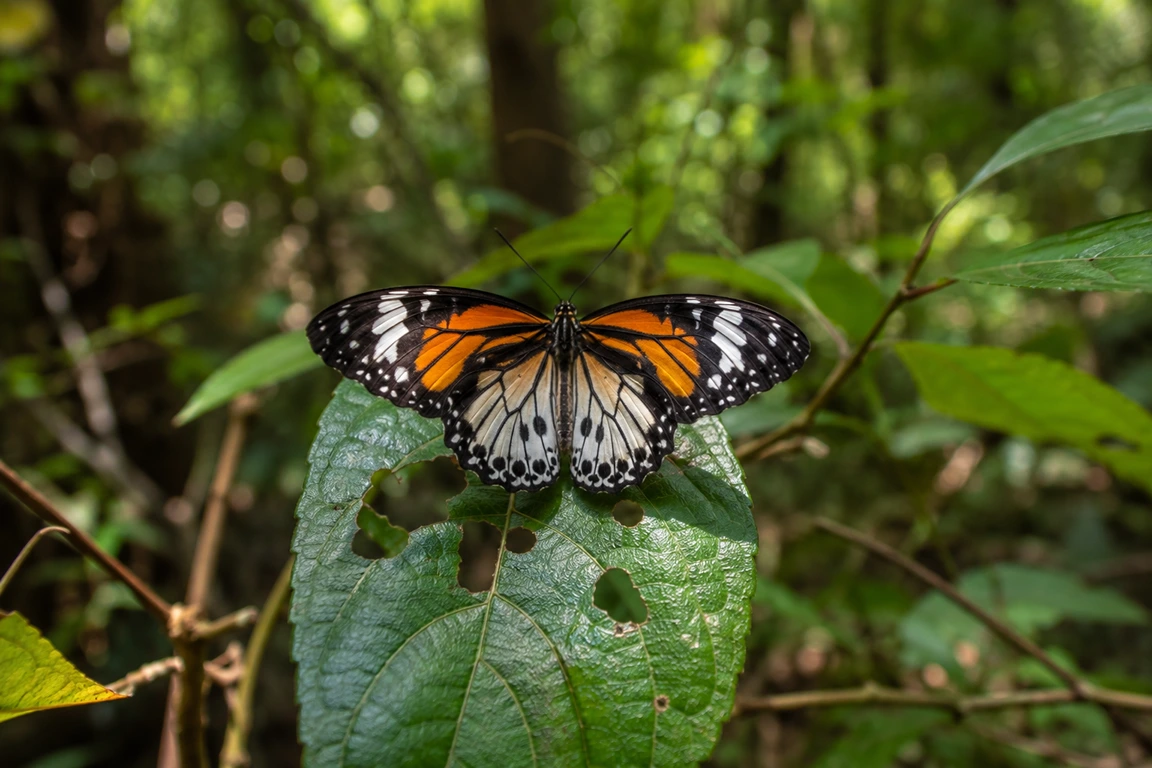
Finding a butterfly resting on a leaf so perfectly camouflaged that you almost walk past it.
Sitting beside a river without checking the time.
These moments seem ordinary while they are happening.
Only later do you realise they became the memories that mattered most.
Where the Forest Becomes the Destination
Most treks have a destination.
Korba has a journey.
That difference changes everything.
In the Himalayas, every step usually leads towards something bigger—a summit, a mountain pass, an alpine lake.
Here, every step simply leads deeper into the forest.
The trail itself becomes the experience.
There is no pressure to reach somewhere quickly because beauty refuses to stay in one place.
It appears unexpectedly.
Sometimes it is hidden beneath your feet.
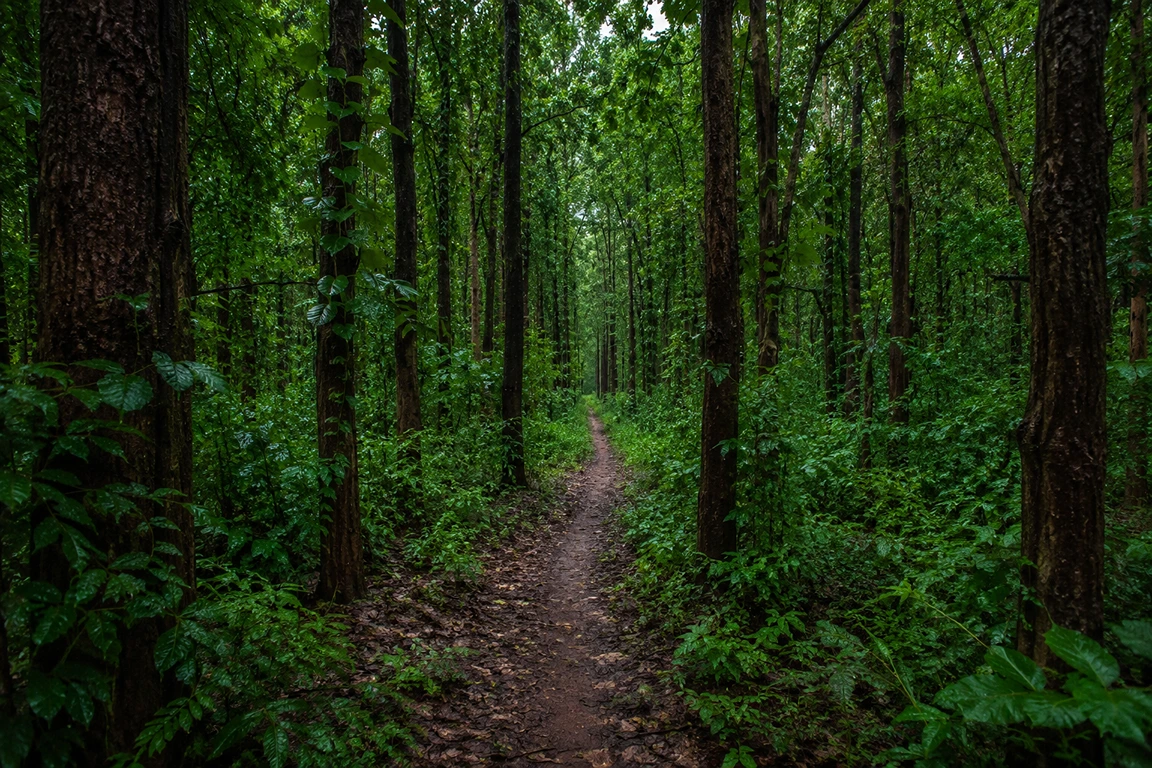
The forest floor is alive with fallen leaves, delicate ferns, tiny mushrooms pushing through damp soil and roots that twist naturally across the path like ancient sculptures.
Sometimes beauty exists above you.
Towering Sal trees stretch towards the sky, their branches weaving together to create a natural ceiling that filters harsh sunlight into soft golden rays.
Sometimes it arrives through sound.
The distant rush of unseen water.
The rhythmic tapping of a woodpecker.
The gentle movement of leaves as the wind quietly passes through the valley.
Modern life has taught us to ignore small details.
Korba teaches us to notice them again.
Walking Through a Landscape That Still Breathes
There is a difference between visiting nature and entering a living ecosystem.
Korba belongs to the second category.
The forests surrounding the Maikal Hills are not decorative landscapes created for tourism.
They are living habitats where every stream, tree, insect and bird plays a role in maintaining ecological balance.
Nothing feels artificial.
There are no carefully planted gardens.
No paved viewpoints.
No loud music.
Nature exists exactly as it chooses.
That honesty becomes surprisingly refreshing.
The trail rises gently before disappearing beneath thick tree cover.
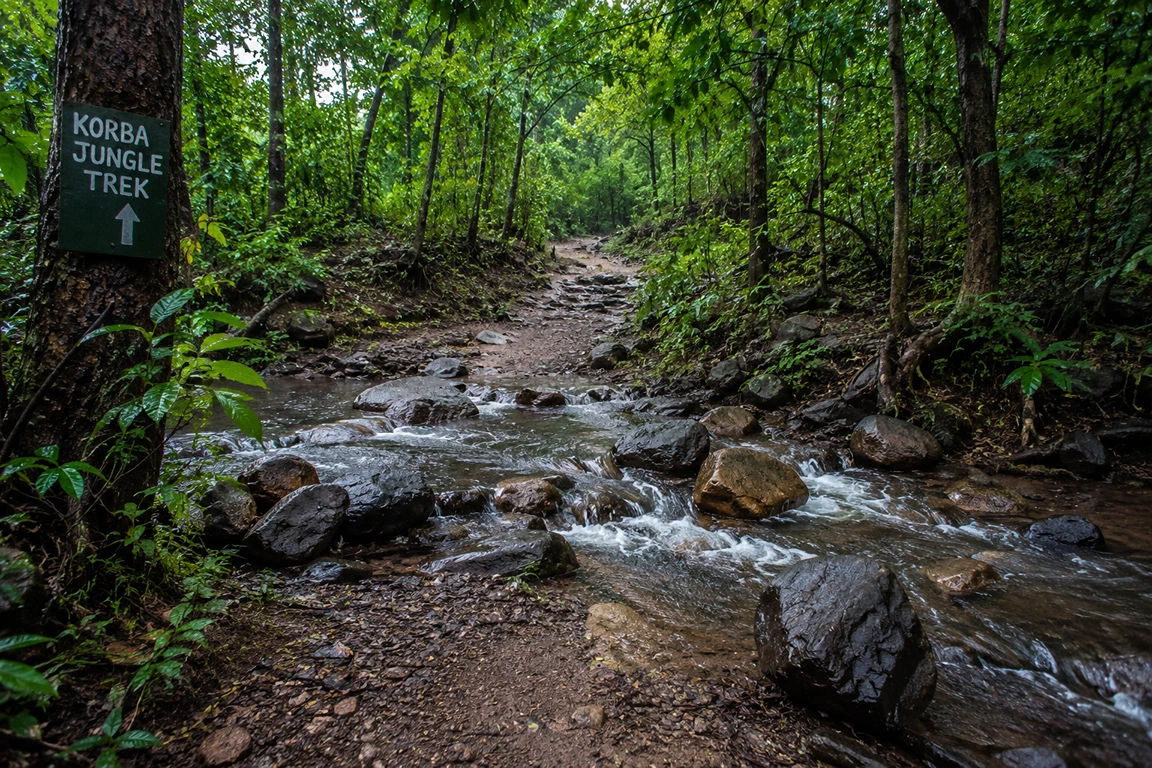
A narrow stream quietly cuts across the path.
Smooth rocks reveal years of flowing water.
Sunlight reflects from tiny pools before disappearing again beneath the forest canopy.
Hours pass almost unnoticed.
You stop measuring distance.
Instead, you begin measuring moments.
One more beautiful tree.
One more bird call.
One more hidden bend in the trail.
One more reason to keep walking.
A Forest That Rewards Curiosity
One of the biggest surprises about the Korba Jungle Trek is that the forest never repeats itself. Every hour feels different from the one before. The landscape changes so gradually that you barely notice it happening, until you suddenly find yourself standing somewhere that looks nothing like the trail you were walking just a short while ago.
A narrow woodland path gives way to an open clearing where sunlight pours through the trees. A gentle stream appears beside the trail, its water so clear that every pebble on the riverbed is visible. Further ahead, weathered rock formations emerge from beneath thick carpets of moss, quietly revealing how rain and rivers have shaped this landscape over thousands of years.
This constant change is what makes walking through Korba so addictive.
You begin every bend in the trail with a simple question:
"What lies beyond this corner?"
Unlike many popular trekking destinations where everyone waits for a famous viewpoint, Korba teaches you that every kilometre deserves your attention.
The destination is not a single place.
The destination is the forest itself.
The Forest Speaks in a Different Language
If you spend enough time in the wilderness, you realise that forests communicate constantly.
Not with words.
With sounds.
Early in the morning, birds become the first storytellers. Their calls echo through the trees long before sunlight reaches the forest floor. Somewhere high above, a woodpecker taps patiently against an old trunk. In another direction, the soft chatter of smaller birds fills the canopy as they move between branches searching for food.
As the day progresses, the sounds change.
Wind begins moving through the Sal trees.
Water becomes louder as streams gather strength after passing through rocky gullies.
Insects replace birds during the warm afternoon hours.
And as evening approaches, the forest prepares for another shift. Daytime voices slowly fade, making room for the quiet orchestra of the night.
Many trekkers arrive hoping to see the forest.
Korba encourages you to listen to it.
It is an experience that photographs can never fully capture.
Wildlife Exists Even When You Don't See It
The forests of Korba are alive with wildlife, but unlike a safari, there are no guarantees here—and that is precisely what makes every encounter feel genuine.
Your guide may stop suddenly and point towards a set of fresh footprints pressed into soft earth. A broken bamboo stem might suggest that elephants passed through the area during the night. A sudden silence among birds can hint that another animal is moving somewhere deeper inside the trees.
These small clues transform an ordinary walk into something far more exciting.
You begin to understand that wildlife is not limited to dramatic sightings.
It exists in every part of the forest.
The butterflies drifting through patches of sunlight.
The spiders patiently rebuilding their webs after rain.
The colourful fungi emerging from fallen logs.
The reptiles warming themselves on rocks before disappearing back into the undergrowth.
Even without seeing a large animal, you constantly feel surrounded by life.
That feeling is rare.
And it reminds you that the Korba Jungle Trek is not simply taking you through a beautiful landscape—it is introducing you to a living ecosystem.
If wildlife fascinates you, you'll enjoy learning more about the wildlife and biodiversity of the Korba Jungle Trek, where we explore the remarkable species that call these forests home.
Water Finds Its Own Path
There is something almost cinematic about discovering a waterfall in a dense forest.
You never see it immediately.
The journey begins with sound.
A faint rush of flowing water reaches your ears long before the trees begin to thin. The air suddenly feels cooler. Moisture hangs gently above the rocks. Ferns become more abundant. Moss clings to every shaded surface.
Then, almost without warning, the forest opens.
Water tumbles over ancient stone, disappearing into crystal-clear pools before continuing its journey through the valley.
Unlike famous waterfalls that attract crowds, food stalls, and concrete platforms, the waterfalls of Korba still belong to the forest.
Among them, Ranijhariya Waterfall remains one of the trek's most rewarding discoveries.
There is no dramatic entrance.
No signboard announcing your arrival.
Only the quiet satisfaction of reaching a place that still feels genuinely untouched.
Many trekkers spend long minutes sitting beside the water without saying a word.
Not because there is nothing to talk about.
Because the forest has already said enough.
If waterfalls are your favourite part of trekking, don't miss our guide to the hidden waterfalls and riverside camping experiences on the Korba Jungle Trek.
Walking Through India's Forgotten History
Adventure usually encourages us to look ahead.
Korba occasionally asks us to look back.
Hidden within these forests are ancient rock shelters carrying paintings created thousands of years ago. They are simple in appearance but extraordinary in significance.
Standing before them is a humbling experience.
There are no museum walls.
No glass enclosures.
No artificial lighting.
History survives exactly where it was created.
The same forests that shelter today's wildlife once sheltered the artists who painted these rocks.
The same rivers that refresh trekkers today once sustained early communities.
The same hills have silently watched generations come and go.
These paintings remind us that Korba is not only rich in biodiversity but also in human history.
The forests are not empty landscapes.
They are living archives.
To understand the deeper cultural stories behind these remarkable sites, explore our article on the ancient rock paintings and tribal heritage of Korba Jungle Trek.
The People Who Understand the Forest Best
No article about Korba would be complete without acknowledging the indigenous communities who have lived alongside these forests for generations.
For them, the jungle is not an adventure destination.
It is home.
Knowledge that many visitors consider fascinating—identifying medicinal plants, understanding seasonal changes, reading animal tracks—is simply part of everyday life.
Their relationship with the forest is built on coexistence rather than control.
That perspective quietly changes the way many trekkers view nature.
Instead of asking, "What can I take from this place?"
You begin asking,
"How can I leave this place exactly as I found it?"
That simple shift in mindset is perhaps the greatest lesson the Korba Jungle Trek offers.
The Mountains Give You a Summit. Korba Gives You a Story.
Every trek leaves you with something.
Some give you a certificate.
Some give you a summit photograph.
Korba gives you stories.
Weeks after returning home, you may forget exactly how many kilometres you walked. You might struggle to remember the order of every trail or every campsite. But there are certain moments the forest quietly refuses to let you forget.
The first ray of sunlight breaking through the Sal canopy.
The sound of a waterfall before it came into view.
Fresh animal tracks pressed into the damp earth after an early morning shower.
The feeling of eating a simple meal after a full day on the trail.
The stars above a riverside campsite where there wasn't another artificial light for miles.
These aren't dramatic moments.
They're deeply human ones.
And perhaps that is why they stay with you.
Unlike many famous trekking destinations where the highlight lasts only a few minutes at the summit, Korba spreads its magic across the entire journey.
Every hour offers something worth remembering.
Why Offbeat Destinations Like Korba Matter More Than Ever
India is blessed with extraordinary trekking destinations.
The Himalayas will always inspire awe.
The Sahyadris will always challenge adventure seekers.
But there is another side of Indian trekking that deserves equal attention.
The quiet forests.
The forgotten trails.
The places that haven't yet become famous.
Korba represents that side beautifully.
Choosing destinations like Korba is not simply about avoiding crowds.
It is about discovering landscapes before commercial tourism changes them.
It is about supporting local communities rather than overcrowded tourism economies.
It is about travelling with curiosity instead of following trends.
Today, many travellers are beginning to seek experiences that feel authentic rather than popular.
Korba answers that search perfectly.
If you've ever wondered how jungle trekking compares with mountain trekking, you'll notice that the reward is completely different. Here, the experience is not measured by elevation gain but by immersion in nature.
Every Season Writes a New Chapter
One of the most fascinating aspects of the Korba Jungle Trek is that it never looks exactly the same twice.
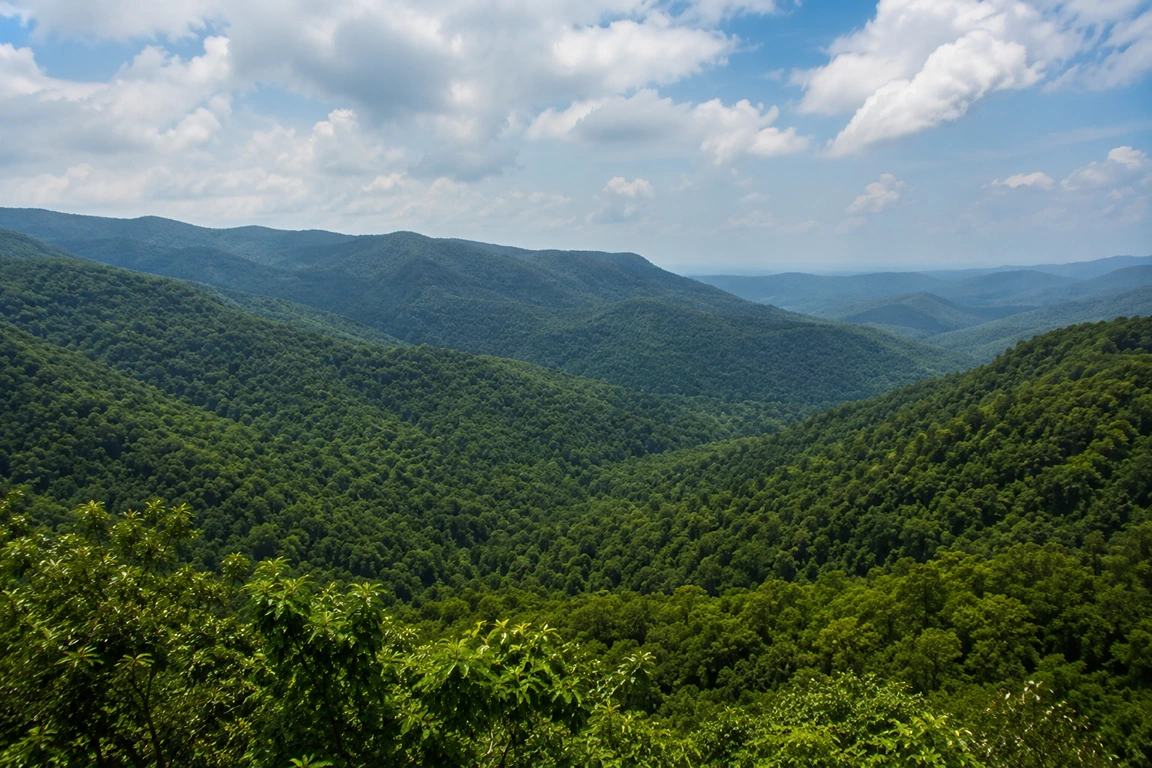
Visit soon after the monsoon and you'll find forests bursting with fresh shades of green. Streams run stronger, waterfalls appear more dramatic, and the scent of rain lingers beneath the trees.
Come during winter and the experience becomes completely different.
Cool mornings fill the valleys with mist.
The skies remain brilliantly clear.
Walking conditions become even more comfortable, allowing trekkers to spend long hours exploring without the intensity of summer heat.
Even the sounds of the forest change.
Different birds become active.
Different flowers bloom.
Different insects emerge.
Every season tells a different story.
We'll explore these seasonal transformations in detail in our upcoming guide to Korba through every season, helping you understand how the forest changes throughout the year.
Responsible Travel Is the Future of Adventure
Places like Korba remain beautiful because they have been respected for generations.
That responsibility now belongs to every visitor.
Responsible trekking is not complicated.
Carry your waste back.
Avoid disturbing wildlife.
Stay on designated trails.
Respect local customs.
Support local communities.
Leave every campsite cleaner than you found it.
These simple actions ensure that future trekkers will experience the same untouched forests you enjoyed.
Adventure and conservation should always walk together.
If you'd like to learn more about sustainable travel practices, explore our guide to eco-tourism in Korba.
If You Stay One More Day…
Many travellers leave Korba wishing they had stayed longer.
Not because they missed a famous attraction.
But because the forest has a way of making you slow down.
If your journey allows, spend an extra day exploring the region. Beyond the trekking trail are waterfalls, viewpoints, historic temples, and peaceful villages that reveal another side of Korba rarely seen by visitors.
We've put together a guide to the best places to visit near the Korba Jungle Trek to help you extend your adventure.
Things That Will Surprise You
Before most people visit Korba, they imagine a simple forest trek.
They leave talking about completely different things.
The silence.
The stars.
The smell of the forest after rain.
The kindness of local communities.
The feeling of disconnecting from mobile networks without missing them.
The way time seems to move more slowly beneath the trees.
These small surprises often become the most treasured memories of the entire journey.
We'll soon share a dedicated article featuring the things nobody tells you about the Korba Jungle Trek, filled with honest observations from the trail.
The Forest Changes You More Than You Change It
There is a saying among experienced travellers:
"The best journeys don't change the place. They change the traveller."
Korba embodies that idea perfectly.
You arrive expecting a trek.
You leave carrying something much more valuable.
A renewed appreciation for silence.
A deeper respect for forests.
An understanding that adventure isn't always about climbing higher—it can also be about slowing down enough to truly notice the world around you.
Long after the photographs are stored away and your trekking shoes are cleaned, one memory continues to return.
Not of a summit.
Not of a viewpoint.
But of a quiet forest where nature still speaks in its own language.
That is the real gift of the Korba Jungle Trek.
Ready to Experience Korba?
Reading about Korba can only take you so far.
To truly understand why this hidden corner of Chhattisgarh leaves such a lasting impression, you have to walk its forest trails, listen to its rivers, and spend a night beneath its star-filled skies.
If you're ready to experience one of India's most underrated trekking destinations, explore our Korba Jungle Trek Itinerary for complete day-wise details, inclusions, accommodation information, and upcoming departures.
Frequently Asked Questions
Is Korba Jungle Trek suitable for beginners?
Yes. The trails are beginner-friendly, making the trek ideal for anyone with basic fitness and a love for nature.
What makes Korba different from Himalayan treks?
Korba focuses on forests, rivers, waterfalls, wildlife, and culture rather than high-altitude summits, offering a slower and more immersive adventure.
What wildlife can be seen during the trek?
The forests support elephants, deer, birds, reptiles, butterflies, and many other species. Sightings depend on season and natural movement.
Is the Korba Jungle Trek crowded?
No. One of Korba's biggest strengths is its peaceful and offbeat character, allowing visitors to enjoy nature away from large crowds.
Why choose Korba Jungle Trek?
If you value authentic nature, biodiversity, cultural heritage, and meaningful travel over commercial tourism, Korba offers one of the most rewarding trekking experiences in Central India.