

When people talk about the Korba Jungle Trek, they usually begin with its forests.
They speak about towering Sal trees, hidden waterfalls, rivers flowing quietly through the valleys, and the remarkable biodiversity that makes this corner of Chhattisgarh so special.
All of that is true.
But the forests protect something even older.
Long before trekking trails existed, before maps were drawn, and before modern towns appeared across Central India, people were already living among these hills. They hunted here, gathered food from the forests, crossed the same streams that trekkers cross today, and left behind stories that still survive—not in books, but on stone.
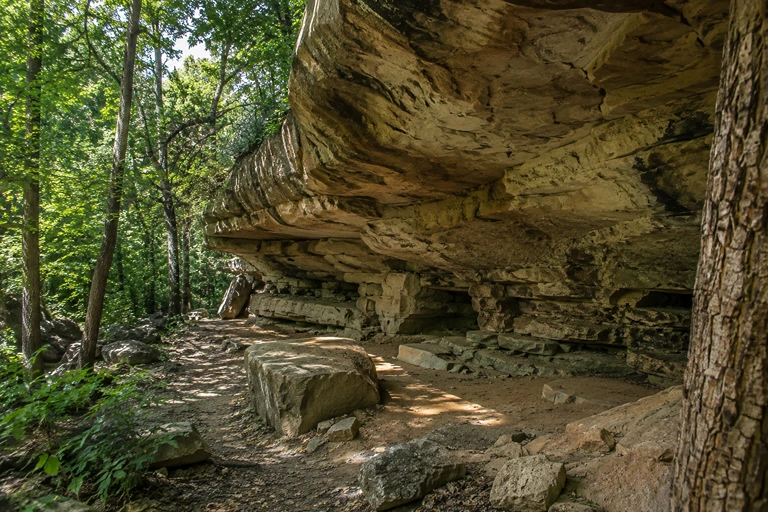
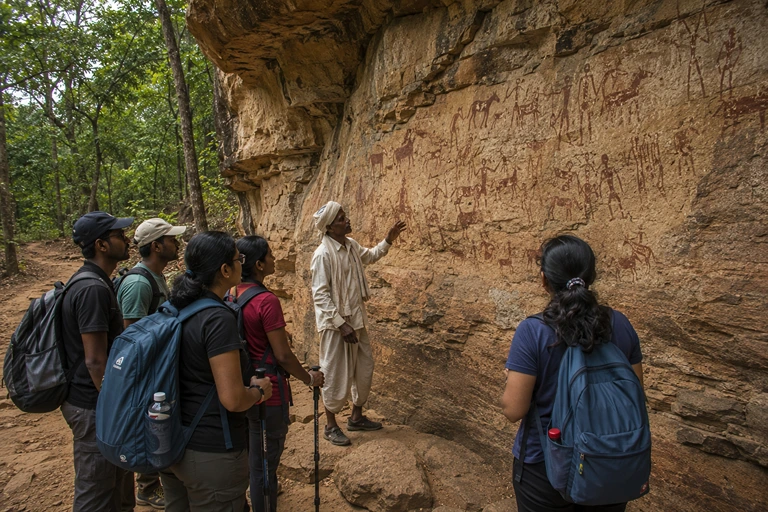
Hidden within the forests surrounding the Korba Jungle Trek are ancient rock shelters carrying paintings believed to date back thousands of years. Time has faded many of them, yet they continue to offer a remarkable glimpse into the lives of the people who once called these forests home.
For many trekkers, discovering these rock paintings becomes one of the most memorable moments of the journey.
Not because they are grand monuments.
But because they feel real.
There are no museum walls.
No bright lights.
No ticket counters.
Only the forest, the rocks, and stories that have quietly survived for centuries.
The Forest Was Home Long Before It Became a Trek
Walking through Korba today, it is easy to think of the forest as a destination.
For early communities, it was simply life.
The rivers provided water.
The forests offered food, shelter, and medicinal plants.
Animals shaped hunting traditions.
The changing seasons determined everyday routines.
Everything people needed existed within the landscape around them.
This close relationship with nature is one of the reasons prehistoric communities often chose rock shelters overlooking forests and rivers.
These natural formations provided protection from weather while keeping them connected to the resources that sustained them.
Today, standing inside one of these shelters creates a powerful sense of perspective.
The forest outside has changed.
Generations have come and gone.
Yet the relationship between people and nature remains visible on the stone walls.
More Than Paintings on Stone
At first glance, the rock paintings appear simple.
Human figures.
Animals.
Hunting scenes.
Symbols.
Patterns.
But simplicity does not diminish their significance.
Each painting represents an attempt to record life.
Long before written language became common, art allowed people to share knowledge, celebrate traditions, and preserve memories for future generations.
Some figures appear to show groups of hunters moving together.
Others depict animals that once lived within these forests.
Certain symbols continue to puzzle archaeologists, reminding us that not every story from the past can be fully understood.
That mystery is part of their beauty.
Unlike monuments built by kings or emperors, these paintings reflect the lives of ordinary people.
They capture moments of survival, celebration, and community rather than power or conquest.
For trekkers, this makes them deeply personal.
Instead of reading about history, you stand where history happened.
Did You Know?
Many prehistoric rock paintings across Central India were created using natural pigments made from minerals, charcoal, and plant-based materials. Their remarkable durability has allowed some artworks to survive for thousands of years despite exposure to the elements.
Walking Through an Open-Air Museum
Museums protect history by placing it behind glass.
Korba protects history by leaving it where it belongs.
That is what makes these rock shelters so extraordinary.
The surrounding landscape has become part of the experience.
You don't simply admire the paintings.
You notice the valley below.
The nearby stream.
The forest stretching beyond the rocks.
Suddenly it becomes easier to understand why ancient communities chose these locations.
They were practical.
They offered shelter.
They overlooked water sources.
They remained closely connected to the forests that supported daily life.
The paintings cannot be separated from their environment.
Together, they tell one complete story.
The Forest Still Has Its Original Storytellers
The forests of Korba are often described through the lens of adventure. Trekkers admire the dense Sal trees, photographers wait patiently beside streams, and wildlife enthusiasts search the canopy for birds hidden among the branches.
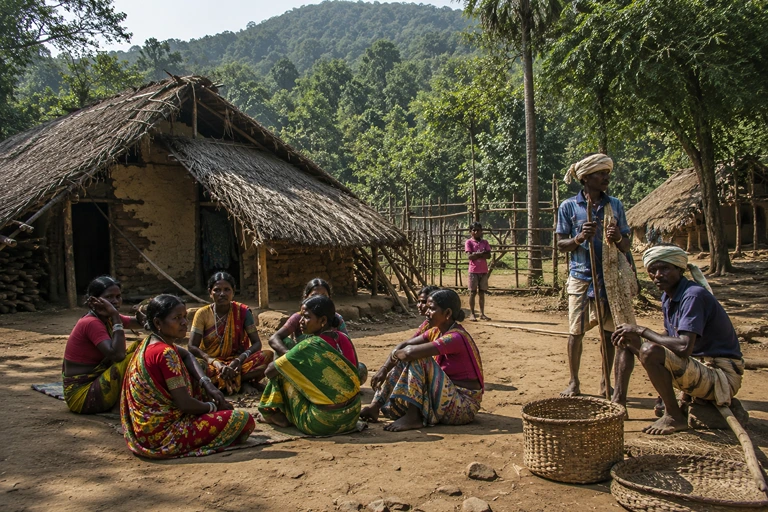
But for the indigenous communities of this region, the forest has never been an adventure destination.
It has always been home.
Long before roads connected remote villages to nearby towns, these forests shaped everyday life. They provided food, clean water, medicinal plants, building materials, and seasonal resources that helped communities adapt to changing weather throughout the year.
Knowledge of the forest wasn't written in books.
It was passed from one generation to another.
Children learned which plants could be eaten and which should be avoided. Elders understood the changing behaviour of wildlife with the arrival of different seasons. Hunters recognised animal tracks long before they became visible to outsiders, while gatherers knew exactly where to find fruits, roots, herbs, and honey without disturbing the natural balance of the forest.
This relationship was never about controlling nature.
It was about living with it.
That philosophy still defines many tribal communities across Chhattisgarh today.
Walking through Korba becomes far more meaningful when you realise that every trail has been walked by countless generations before you.
A Culture Rooted in the Forest
For many indigenous families, the changing seasons are not simply weather patterns.
They shape everyday life.
The arrival of the monsoon brings fresh vegetation and renewed water sources. Winter offers pleasant weather for farming and gathering forest produce, while summer demands careful use of natural resources before the rains return again.
The forest is part of every season.
It influences local food, traditional festivals, farming practices, and even folklore passed down through generations.
Many local dishes continue to use ingredients gathered responsibly from nearby forests, reflecting a deep understanding of seasonal availability rather than year-round abundance.
This rhythm of life feels very different from modern cities.
There is no rush.
Nature decides the calendar.
Visitors often describe this as one of the most refreshing aspects of the Korba Jungle Trek.
You don't simply observe another culture.
You witness a way of life that has remained closely connected to the natural world.
Every Painting Begins with a Story
Standing before an ancient rock painting, it is tempting to admire only the artwork.
Yet every figure painted on the stone once belonged to a real story.
Perhaps it celebrated a successful hunt.
Perhaps it recorded an important gathering.
Perhaps it represented an animal respected by the community.
Or perhaps its meaning has simply been lost with time.
That mystery is part of what makes these sites so remarkable.
Unlike written history, rock art rarely explains itself.
It invites interpretation.
Every visitor sees something slightly different.
Some notice the artistic techniques.
Others imagine daily life thousands of years ago.
Many simply stand quietly, trying to absorb the fact that human hands created these images long before modern civilisation reached these forests.
The paintings become more than archaeological remains.
They become conversations across time.
Did You Know?
Many prehistoric communities selected natural rock shelters because they offered protection from rain, remained cool during hot weather, and overlooked nearby rivers or valleys that supported daily life.
Respecting Heritage While Exploring It
One of the greatest responsibilities of modern travellers is ensuring that ancient heritage survives for future generations.
Rock paintings are surprisingly fragile.
Touching them, scratching the surface, applying water, or attempting to enhance colours for photographs can permanently damage artwork that has survived for centuries.
Responsible trekking means appreciating history without leaving any trace behind.
The same respect should extend to local communities.
Photography should always be taken with permission.
Conversations should be approached with curiosity rather than assumption.
Cultural traditions deserve appreciation rather than performance.
Meaningful travel is built on mutual respect.
The Korba Jungle Trek offers visitors the rare opportunity to experience both remarkable landscapes and remarkable cultures.
Protecting both is equally important.
The Connection Between Nature and Culture
It is impossible to separate Korba's forests from its history.
Without the forests, these communities would never have developed the knowledge that still survives today.
Without the rivers, settlements would never have flourished.
Without the rock shelters, many stories of early human life would have disappeared forever.
Nature and culture have always evolved together.
That connection remains visible throughout the Korba landscape.
This is why the trek feels different from visiting a historical monument or a wildlife sanctuary independently.
Everything is connected.
The forests explain the history.
The history explains the communities.
The communities explain the landscape.
Together they create an experience that is far richer than either nature or archaeology alone.
While this article explores Korba's cultural history, the forests themselves are equally fascinating. Learn more about the Wildlife, Forests & Biodiversity of Korba Jungle Trek, where we explore the living ecosystem that has supported both wildlife and people for generations.
A Journey That Changes Perspective
Many travellers begin the Korba Jungle Trek expecting beautiful scenery.
They leave talking about something else.
The realisation that people have lived alongside these forests for thousands of years.
The understanding that nature is not simply a backdrop but the foundation of an entire culture.
The appreciation that adventure becomes far more meaningful when we understand the stories hidden beneath our feet.
Every rock shelter.
Every ancient painting.
Every village.
Every forest trail.
They are all chapters of the same story.
Korba is not simply a trekking destination.
It is a living landscape where history, culture, and nature continue to exist side by side.
That is what makes it unforgettable.
Keeping History Alive Through Responsible Travel
Travelling through Korba is about more than discovering hidden places. It is about recognising that every step is taken through a landscape shaped by thousands of years of human history.
Unlike monuments surrounded by fences or museums protected by walls, the cultural heritage of Korba exists within a living forest. The rock shelters remain part of the landscape where they were created, while tribal communities continue to preserve traditions closely connected to the forests around them.
This makes responsible tourism especially important.
Visitors should avoid touching or climbing on rock shelters, refrain from writing or carving on rocks, and always follow the guidance of local trek leaders. Even something as simple as removing a small stone or disturbing an archaeological site can affect future research and conservation.
Respect extends beyond the rock paintings themselves.
When visiting tribal villages, remember that you are entering someone's home rather than a tourist attraction. A friendly conversation, asking permission before taking photographs, supporting local guides, and purchasing locally made handicrafts are small gestures that create a positive impact while preserving local culture.
The greatest compliment a traveller can give Korba is leaving with memories rather than leaving a mark.
Why Korba Is More Than Just a Jungle Trek
At first glance, Korba attracts visitors because of its forests.
But those who spend time here soon realise that nature is only one part of its identity.
Very few trekking destinations in India allow you to experience such a remarkable combination of biodiversity, prehistoric history, indigenous culture, rivers, waterfalls, and peaceful forest trails within a single journey.
The forests introduce you to wildlife.
The rivers introduce you to silence.
The waterfalls introduce you to nature's beauty.
The rock paintings introduce you to history.
The tribal communities introduce you to a way of life that has remained deeply connected to the land.
Together, these experiences create something that cannot be found through scenery alone.
Korba becomes more than a destination.
It becomes a story.
Every Trek Leaves Something Behind
People often ask what makes one trek more memorable than another.
Sometimes it is the mountain.
Sometimes it is the people.
Sometimes it is the challenge.
Korba leaves a different kind of memory.
It reminds us that long before trekking became a recreational activity, forests were places where people built lives, shared traditions, raised families, created art, and learned to live alongside nature.
Walking through these forests today means becoming part of that continuing story, even if only for a few days.
When you stand before an ancient rock shelter, you realise that generations of people have looked at the same valley, listened to the same flowing streams, and found inspiration in the same landscape.
Few adventures offer that kind of perspective.
That is why the Korba Jungle Trek is remembered not only for its beauty but also for the history hidden beneath its trees.
Continue Exploring Korba
If this journey through Korba's history has sparked your curiosity, there is much more to discover.
Learn how the forests support an incredible variety of birds, butterflies, mammals, and native vegetation in our article on Wildlife, Forests & Biodiversity of Korba Jungle Trek.
Curious about the waterfalls and peaceful campsites hidden within these forests? Continue with Hidden Waterfalls & Riverside Camping on Korba Jungle Trek to explore another unforgettable side of the region.
And if you're planning your own adventure, our Korba Jungle Trek Itinerary provides complete day-wise details, trek highlights, accommodation, inclusions, and upcoming departures.
Frequently Asked Questions
Are there ancient rock paintings on the Korba Jungle Trek?
Yes. Certain areas around the Korba Jungle Trek feature prehistoric rock shelters with ancient paintings that provide valuable insights into the lives of early communities who once lived in these forests.
Why are the rock paintings important?
They represent one of the earliest forms of human expression and help archaeologists understand the history, beliefs, and daily lives of prehistoric communities in Central India.
Can visitors see tribal communities during the trek?
Depending on the trekking route and local conditions, visitors may pass through or near tribal villages. Respectful interaction through local guides helps visitors understand the region's rich cultural heritage while supporting responsible tourism.
How can travellers help preserve Korba's cultural heritage?
Avoid touching rock paintings, never leave graffiti, follow local guidelines, respect tribal communities, avoid littering, and support responsible trekking practices that protect both nature and heritage.
What makes Korba different from other trekking destinations?
Korba combines dense Sal forests, wildlife, rivers, waterfalls, prehistoric rock art, and living tribal traditions into a single experience. Few trekking destinations in India offer such a unique blend of natural and cultural heritage.
Final Thoughts
Many trekking destinations are remembered for a summit or a viewpoint.
Korba is remembered for something deeper.
It reminds us that forests are not empty landscapes waiting to be explored. They are places where nature and humanity have evolved together for thousands of years. Every rock painting, every forest trail, every village, and every flowing stream adds another chapter to a story that is still being written.
If you visit Korba with curiosity rather than haste, you won't just return with beautiful photographs.
You'll return with a deeper appreciation for the people, history, and landscapes that make this corner of Chhattisgarh truly extraordinary.