
Get in Touch with Our Trek Expert
Trek Fee
EX.Srinagar
Loading rental items...
Select Number of Seats
SELECT DATE TO REGISTER - 2026
About Kashmir Great Lakes Trek
A breathtaking Himalayan trek through Kashmir’s alpine lakes, wildflower meadows, and mountain passes.
Quick Itinerary
Day 1: Srinagar to Sonamarg Drive | Trek to Shitkadi Camp
• Drive from Srinagar to Sonamarg • Short acclimatization trek to Shitkadi • Camp in scenic meadows
Day 2: Shitkadi to Nichnai Camp
• Trek through pine forests and grasslands • Gradual ascent into alpine meadows • Camp near mountain stream
Day 3: Nichnai to Vishansar Lake via Nichnai Pass | Visit Kishansar Lake
• Cross Nichnai Pass • Reach Vishansar Lake campsite • Explore Kishansar Lake
Day 4: Vishansar to Gadsar via Gadsar Pass | Visit Yamsar Lake
• Cross highest pass of the trek • Stunning views from Gadsar Pass • Visit Yamsar Lake en route • Camp at Gadsar
Day 5: Gadsar to Satsar Lakes
• Trek through meadows and shepherd trails • Reach Satsar lake region • Camp near alpine lakes
Day 6: Satsar to Gangbal Lake via Zaj Pass | Visit Nundkol Lake
• Cross Zaj Pass • Descend to Gangbal Lake • Explore Nundkol Lake
Day 7: Gangbal Buffer Day / Exploration Day
• Buffer for weather or acclimatization • Explore Gangbal and Nundkol lakes • Leisure day by the lake
Day 8: Gangbal to Naranag | Drive to Srinagar
• Final descent to Naranag • Drive back to Srinagar • Trek ends
Photo Gallery of Kashmir Great Lakes Trek
Detail Itinerary
Day 1: Srinagar to Sonamarg Drive | Trek to Shitkadi Camp
Drive Duration: 3 hours Altitude: 9,187 ft Your Kashmir Great Lakes Trek begins with a scenic drive from Srinagar to Sonamarg, one of the most beautiful valleys in Kashmir. The route follows the Sindh River and passes through charming Kashmiri villages, lush fields, and mountain roads lined with pine trees. Sonamarg, meaning “Meadow of Gold,” is the starting point of this legendary Himalayan trek. After reaching Sonamarg, begin a short acclimatization trek to Shitkadi campsite. This easy walk introduces you to the beauty of Kashmir’s alpine landscapes with green meadows, wildflowers, and views of snow-covered peaks. Shitkadi is a peaceful campsite ideal for adjusting to the altitude before the real trekking begins. Overnight stay in tents.
Altitude: 9,187 ft ft
Day 2: Shitkadi to Nichnai Camp
The second day of the Kashmir Great Lakes Trek starts with a gradual climb through dense pine forests, maple groves, and open meadows. The trail steadily ascends as the valley opens into wide grasslands dotted with grazing sheep and Gujjar shepherd settlements. As you climb higher, the views become increasingly dramatic with rolling meadows and towering ridgelines surrounding the valley. The final stretch to Nichnai Camp is moderately challenging but incredibly scenic. Nichnai is a beautiful high-altitude campsite with a clear mountain stream flowing beside it, making it one of the most refreshing campsites on the trek.
Altitude: 11,500 ft ft
Day 3: Nichnai to Vishansar Lake via Nichnai Pass | Visit Kishansar Lake
Day three brings the first major pass crossing of the Kashmir Great Lakes Trek. Begin with a steady ascent toward Nichnai Pass, where the trail gradually climbs through rocky sections and grassy slopes. The panoramic views from the pass reveal snow patches, rugged ridgelines, and endless Himalayan terrain. After crossing the pass, descend into the beautiful Vishansar valley. Soon, the stunning Vishansar Lake appears, shimmering beneath the open sky and surrounded by mountain walls. After reaching camp, take a short hike to Kishansar Lake, another pristine alpine lake located nearby. These twin lakes are among the most iconic highlights of the Kashmir Great Lakes Trek. Overnight stay near Vishansar Lake.
Altitude: 12,100 ft ft
Day 4: Vishansar to Gadsar via Gadsar Pass | Visit Yamsar Lake
This is one of the most scenic and rewarding days of the Kashmir Great Lakes Trek. Begin early and ascend toward Gadsar Pass, the highest point of the trek. The climb is gradual but long, offering breathtaking views of alpine lakes, snow patches, and dramatic Himalayan ridges. From the top, enjoy panoramic views before descending through rocky trails and flower-filled meadows. Along the route, spot the hidden beauty of Yamsar Lake, a lesser-known alpine gem nestled quietly in the mountains. Continue trekking to Gadsar campsite, a spectacular meadow often called Kashmir’s Valley of Flowers due to its colorful blooms during summer.
Altitude: 12,500 ft ft
Day 5: Gadsar to Satsar Lakes
The trail from Gadsar to Satsar is gentler and more relaxed, making it one of the most peaceful days on the trek. Walk through expansive meadows, marshlands, and grazing grounds used by local shepherds. The route gradually enters the Satsar region, known for its cluster of seven alpine lakes. Satsar is one of the quieter and more remote sections of the Kashmir Great Lakes Trek, offering a raw and untouched wilderness experience. Depending on the season, some lakes appear large and full while others remain partially hidden among the ridges. Camp near the Satsar Lakes and enjoy a calm evening in the mountains.
Altitude: 11,840 ft ft
Day 6: Satsar to Gangbal Lake via Zaj Pass | Visit Nundkol Lake
Day six is another spectacular highlight of the Kashmir Great Lakes Trek. The trail climbs steadily toward Zaj Pass, the final high-altitude pass of the journey. From the top, the views open dramatically toward the twin lakes of Gangbal and Nundkol, set below the mighty Harmukh Peak. The descent from Zaj Pass is steep but rewarding, leading into one of the most scenic basins in Kashmir. Reach Gangbal Lake campsite and later explore nearby Nundkol Lake, known for its crystal-clear waters and serene surroundings. Camping beside these lakes with Harmukh towering above is one of the most unforgettable experiences of the trek.
Altitude: Gangbal 11,650 ft | Nundkol 11,400 ft ft
Day 7: Gangbal Lake Buffer Day / Exploration Day
This day is kept as a buffer in case of weather delays, slow pace, or acclimatization needs. If not used, it becomes a relaxed exploration day at Gangbal Lake. Spend the day resting by the lakeside, taking short walks to nearby ridges, exploring Nundkol again, or simply soaking in the silence of the Himalayas. This is the perfect day to enjoy the beauty of Kashmir without the pressure of trekking long distances. Overnight stay at Gangbal.
Altitude: 11,650 ft ft
Day 8: Gangbal to Naranag | Drive to Srinagar
The final day of the Kashmir Great Lakes Trek begins with a long descent from Gangbal to Naranag. The trail winds through pine forests, open slopes, and rocky paths, gradually bringing you back to the lower valleys. Reach Naranag by afternoon, where the trek officially ends. From here, drive back to Srinagar with unforgettable memories of one of the most beautiful alpine treks in India.
Altitude: 6,982 ft ft
Highlights of the Kashmir Great Lakes Trek
Seven Stunning Alpine Lakes
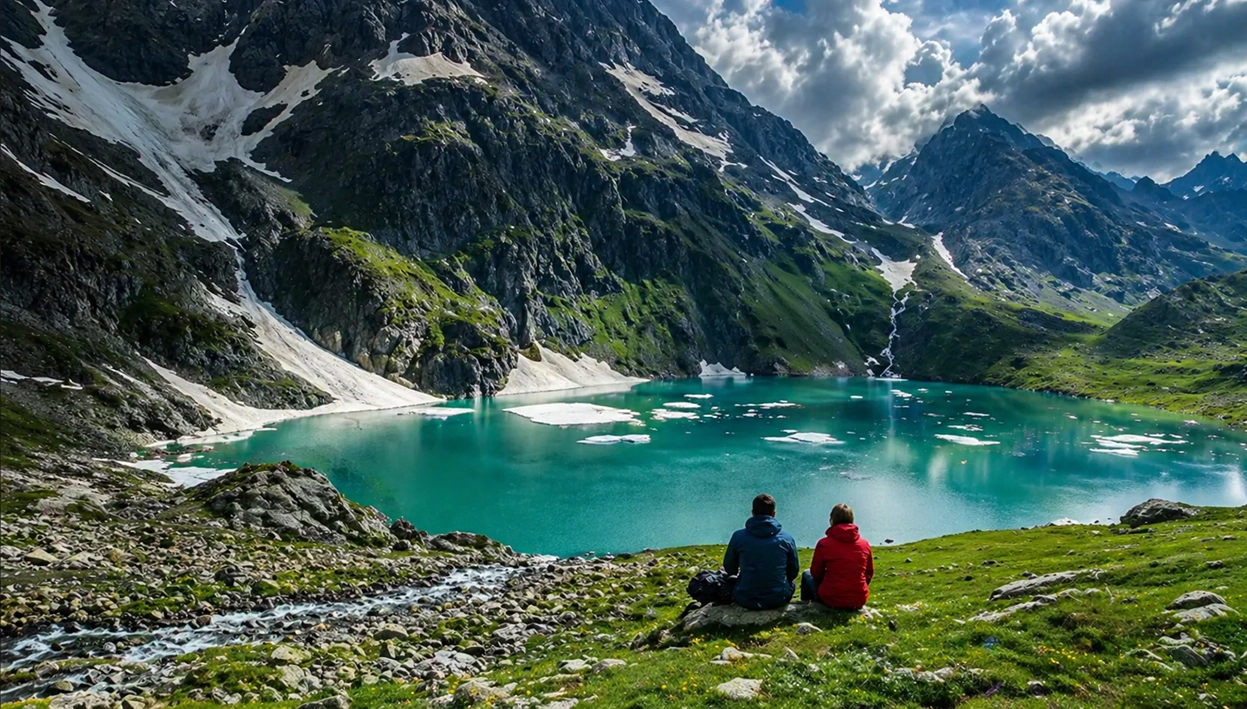
Witness some of the most beautiful high-altitude lakes in India on a single trek, including Vishansar, Kishansar, Gadsar, Satsar, Gangbal, and Nundkol. Each lake has its own unique charm, with crystal-clear waters set against dramatic Himalayan backdrops.
Breathtaking Mountain Passes
Cross iconic high-altitude passes like Nichnai Pass, Gadsar Pass, and Zaj Pass, each offering sweeping views of deep valleys, rugged ridgelines, and snow-covered peaks that make every climb unforgettable.
Endless Wildflower Meadows
Trek through vast green meadows painted with seasonal wildflowers, making the trail feel vibrant, colorful, and incredibly scenic throughout the journey.
Panoramic Himalayan Views
From open ridgelines to high passes, the trek offers nonstop panoramic views of Kashmir’s alpine valleys, glacier-fed streams, and snow-capped Himalayan peaks.
The Iconic Harmukh Peak
One of the most striking highlights of the trek is the majestic sight of Harmukh Peak towering above Gangbal and Nundkol Lakes, creating one of the most memorable landscapes in Kashmir.
A New Landscape Every Day
One of the most unique parts of the Kashmir Great Lakes Trek is how quickly the scenery changes—each day brings new lakes, fresh valleys, mountain passes, and completely different Himalayan views.
One of India’s Most Scenic Treks
With alpine lakes, dramatic mountain scenery, flower-filled meadows, and raw Himalayan beauty, the Kashmir Great Lakes Trek is widely considered one of the most beautiful trekking experiences in India.
How difficult is the Kashmir Great Lakes Trek
The Kashmir Great Lakes Trek is considered a moderate to difficult trek, making it ideal for trekkers who are physically fit and ready for a rewarding Himalayan adventure. While this is not a technical climb, it is still one of the more demanding high-altitude treks in India because of the long trekking hours, steep ascents, and back-to-back days on the trail. On most days, you will trek for 6 to 8 hours through changing terrain that includes grassy meadows, rocky paths, steep climbs, stream crossings, and mountain passes above 12,000 ft. The highest point of the trek, Gadsar Pass, reaches around 13,750 ft, which adds an altitude challenge to the journey. What makes the Kashmir Great Lakes Trek difficult is not technical mountaineering, but endurance. The trek demands good stamina, strong legs, and the ability to stay comfortable while walking for several hours a day at high altitude. For beginners, this trek is possible with proper preparation, but it should not be underestimated. A few weeks of cardio, stair climbing, brisk walking, and basic strength training can make a big difference. If you prepare well, the Kashmir Great Lakes Trek becomes a challenging yet incredibly rewarding experience.
Best time to do this Kashmir Great Lakes Trek
The best time to do the Kashmir Great Lakes Trek is from July to September, when the trail is fully accessible and the landscapes are at their most beautiful. This short trekking window is when the snow begins to melt, the alpine lakes turn crystal clear, and the valleys come alive with lush meadows and blooming wildflowers. July is the start of the trekking season and offers fresh green landscapes, snow patches on the higher sections, and cool mountain weather. It is a beautiful time for trekkers who enjoy a mix of snow and greenery. August is widely considered the best month for the Kashmir Great Lakes Trek. This is when the meadows are at their greenest, wildflowers are in full bloom, and the lakes look their most vibrant. Weather conditions are also more stable, making August the most preferred month for this trek. September offers a quieter and more peaceful trekking experience. The crowds begin to thin out, the skies are often clearer, and the meadows start turning golden. It is a great month for trekkers who prefer crisp mountain views and a calmer trail experience. For the best overall experience, August is usually the ideal time to do the Kashmir Great Lakes Trek.
Why choose wildvoyages for Kashmir Great Lakes Trek
The Kashmir Great Lakes Trek is one of the most stunning treks in India, but the experience depends heavily on who you trek with. Choosing the right trekking company can make the difference between a stressful trip and a smooth, memorable Himalayan adventure. That is exactly why many trekkers choose Wildvoyages for the Kashmir Great Lakes Trek. Wildvoyages focuses on creating a safe, well-managed, and experience-first trekking journey. From the moment you arrive in Srinagar to the final descent at Naranag, every part of the trek is planned with attention to safety, comfort, and overall experience. With Wildvoyages, you trek with experienced trek leaders, knowledgeable local guides, trained support staff, and a team that understands the mountains well. Camps are organized in scenic locations, meals are planned to keep you energized on the trail, and safety protocols are followed carefully throughout the trek. What also makes Wildvoyages stand out is the focus on smaller groups, better coordination, responsible trekking, and a more personal trekking experience. Instead of treating the trek like a fixed package, Wildvoyages focuses on making the Kashmir Great Lakes Trek feel like a well-guided Himalayan experience worth remembering. For trekkers looking for a reliable, safe, and well-organized Kashmir Great Lakes Trek, Wildvoyages offers the kind of support that lets you focus on the mountains while the team handles the rest.
Includes
Accommodation
There will be lodge or homestay accommodation at the base camp, and during the trekking, there'll be shared tents arrangement, ensuring safety throughout your journey.
All Inner Line Permits
We take care of all necessary forest department permissions for your trek, ensuring a smooth and legally compliant journey through the designated areas.
Safety gear
First aid, medical kits, oxygen cylinders, stretchers, etc., will be accessible at all campsites for handling emergencies.
Meals
Enjoy hygienic and nourishing meals prepared by our local cooks, providing the energy you need to tackle each day of your trekking adventure.
Transportation
We arrange transportation from the pickup point to the base camp and any necessary transfers during the trek, ensuring convenient access to the trekking routes.
Excludes
Personal Expenses
Any personal expenses are not included in the trek package.
Additional Cost
Any additional expenses, such as natural calamities and government restriction will not be covered in trek fees.
Meals during pick-up to base
The trek fee does not cover any meals or snacks you purchased during the journey from pick-up points to the base camp.
Items Not Mentioned
Anything not mentioned in the inclusion list will be considered as an exclusion from the package. We advise all trekkers to carefully review the inclusion and exclusion lists before booking your trek with us. 1. Flight Fares to and back from Surat. Any meals/ mineral water during the train & bus travel. 2. Any drinks (hard/soft) during your stay at any of the place of your choice. Any kind of insurance/personal expenses, etc. 3. Any other cost involved due to any kind of natural calamity, forced circumstances, which are out of our control. Anything not mentioned in the package includes.
Things to Carry
Things to Carry
- Down jacket
- Hat / Cap
- Scarf / Balaclava
- Tourch
- Waterbottle
- Fleece
- Hiking pole
- Socks
- Trek pants
- Woolen cap
- Flip Flops / Slippers
- Personal toiletries & Medicines
- Sun glass
- Trekking shoes
- Woolen gloves
- Full Sleeves Tshirts
- Rucksack
- Thermal inners
- Valid id proof
Frequently Asked Questions for Kashmir Great Lakes Trek
Is Kashmir Great Lakes Trek good for beginners?
Yes, the Kashmir Great Lakes Trek can be done by fit beginners, but it is best suited for those who prepare in advance. Since it is a moderate to difficult trek, good stamina and basic fitness are important.
What is the highest point on the Kashmir Great Lakes Trek?
The highest point on the Kashmir Great Lakes Trek is Gadsar Pass, which stands at approximately 13,750 ft.
How long is the Kashmir Great Lakes Trek?
The Kashmir Great Lakes Trek usually covers around 75 to 80 km over 7 to 8 days, depending on the route and campsite plan.
How many lakes are covered in the Kashmir Great Lakes Trek?
The trek covers several alpine lakes including Vishansar, Kishansar, Yamsar, Gadsar, Satsar, Gangbal, and Nundkol.
What is the best month for Kashmir Great Lakes Trek?
August is considered the best month for the Kashmir Great Lakes Trek because the meadows are lush, the flowers are in bloom, and the lakes look their most beautiful.
Is the Kashmir Great Lakes Trek safe?
Yes, the Kashmir Great Lakes Trek is safe when done with a reliable trekking organization like Wildvoyages that follows proper safety measures and experienced trek leadership.
Is mobile network available on the Kashmir Great Lakes Trek?
Mobile network is usually available in Srinagar and parts of Sonamarg, but connectivity becomes weak or unavailable once you move deeper into the trek.
Do I need prior trekking experience for Kashmir Great Lakes Trek?
Prior trekking experience is helpful but not mandatory. With good fitness and preparation, even first-time trekkers can complete it.
What should I pack for Kashmir Great Lakes Trek?
You should carry trekking shoes, warm layers, thermals, rain gear, gloves, sunglasses, sunscreen, a backpack, and personal medication.
Why is Kashmir Great Lakes Trek famous?
The Kashmir Great Lakes Trek is famous for its stunning alpine lakes, flower-filled meadows, high mountain passes, and some of the most beautiful Himalayan scenery in India.
How to reach the base camp of Kashmir Great Lakes Trek
The base camp for the Kashmir Great Lakes Trek is Shitkadi in Sonamarg, and the reporting point for trekkers is usually Srinagar. Reaching the base camp is fairly straightforward, and most trekkers arrive in Srinagar first before continuing to Sonamarg. The easiest and fastest way to reach the Kashmir Great Lakes Trek is by air. You can fly to Srinagar Airport, which is well connected to major Indian cities like Delhi, Mumbai, Bangalore, Pune, and Ahmedabad. From Srinagar, Sonamarg is around a 3-hour drive and serves as the starting point of the trek. If you prefer travelling by train, the nearest major railway station is Jammu Tawi. From Jammu, you can continue to Srinagar by taxi, bus, or shared cab. This road journey usually takes 8 to 10 hours depending on traffic and weather conditions. Srinagar is also accessible by road from Jammu via NH44, making it reachable for those travelling overland. Once you reach Srinagar, the drive to Sonamarg is one of the most scenic parts of the journey. The route follows the Sindh River and passes through beautiful valleys, local villages, and forest-lined roads before reaching Sonamarg. Wildvoyages usually assists with Srinagar pickup and transfers to Sonamarg, making the journey to the Kashmir Great Lakes Trek base camp smooth and convenient for trekkers.
Loading planning guides...
Loading related treks...